Celebrating the vision and passion of young creatives, LAMDA’s inaugural Young Lighting and Sound Designer of the Year Awards will launch in 2027.
Whether you have never worked on a production before, or you’re obsessed with coming up with new sounds and lighting effects for your school show – this award is for you.
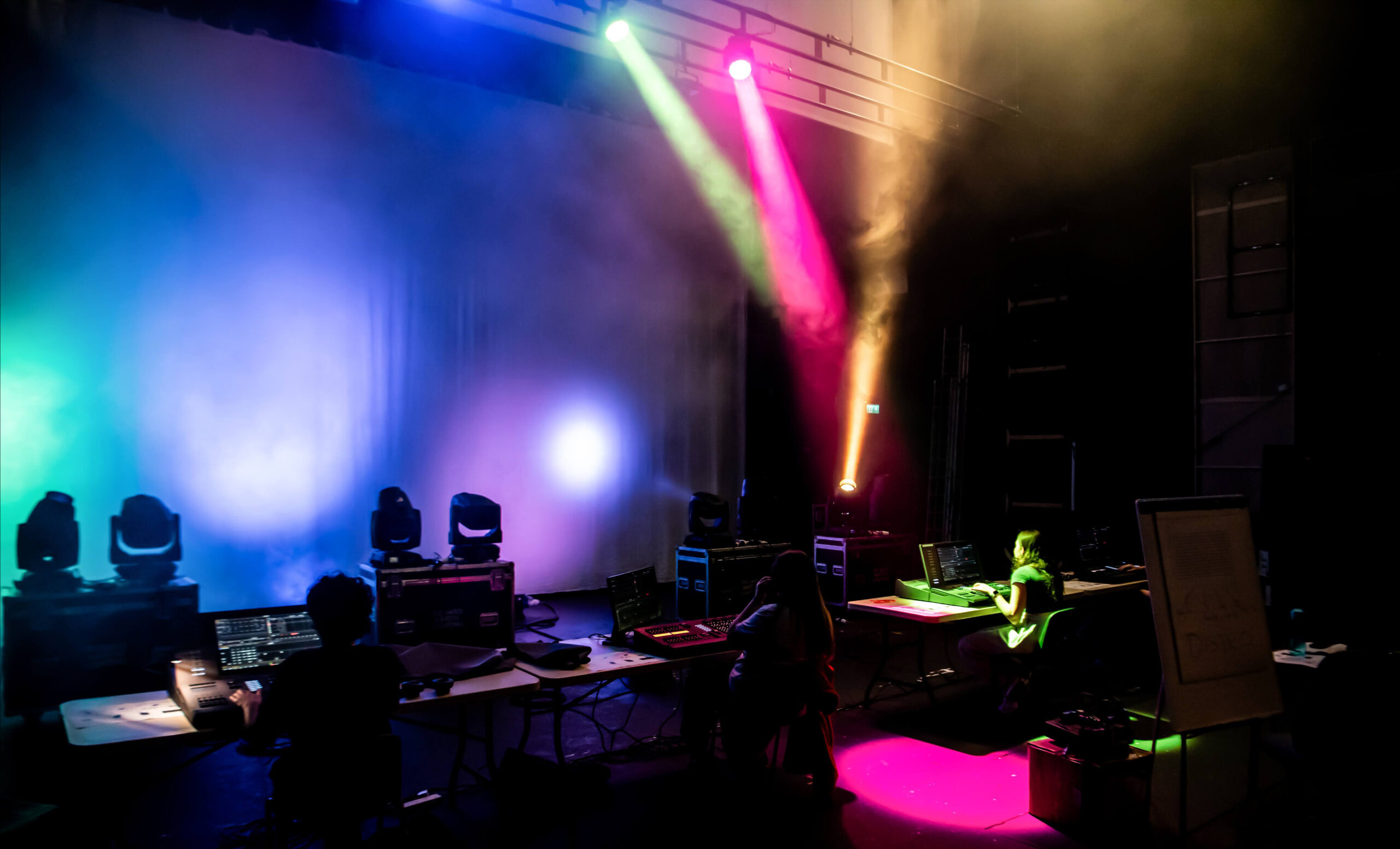
LAMDA’s Young Lighting and Sound Designer of the Year Award is designed to recognise young creatives working backstage at secondary schools across the UK – and it’s all focused on your creativity, your thinking, and your ideas.
Ahead of submissions opening in June 2027, we’ve broken down everything you need to know to begin designing your show and building your portfolio.
Eligibility and Awards
There are four different categories to enter your work into. Which one you submit to depends on your age and whether you have produced work centred around lighting or sound design. The categories are:
- Young Lighting Designer – Year 10 and 11 (aged 14-16)
- Young Lighting Designer – Year 12 and 13 (aged 16-18)
- Young Sound Designer – Year 10 and 11 (aged 14-16)
- Young Sound Designer – Year 12 and 13 (aged 16-18)
The judging panel will assess each submission’s innovation, how well the design serves the story, and the reasoning behind your creative decisions. If you need help, speak to your teacher.
To be eligible, you must be in full-time education or equivalent, and in the school year of the category you are entering. You must be this age at the time of entering that category.
Portfolios
The portfolio is what you will need to submit in order to enter the awards. This is where you can get really creative.
We want to see your vision for bringing a stage to life, the thinking behind your decisions, and how you plan to make it all happen. The rest is up to you.
You can enter work you’ve done on a real school production, or you can pull together ideas of what you would have done if given the chance. Even if you haven’t had the opportunity to put on a show yet, you can still enter a portfolio of your concept.
You might also want to enter a previous, real-life example of work. For example, in 2025, you may have lit the show for your school’s summer musical. If you still have enough materials and notes to form your portfolio, you can build your submission around this.
In your portfolio, you should include:
For entry into this award, we would like you to submit a portfolio of work. Portfolios can either be electronic, websites or on paper and should include the following:
- Your preparation process, with either a cue synopsis or marked-up script showing the planned lighting cues.
- Notes about your design process and how you plan to create the lighting, giving reference to the choices made about colour, equipment, etc.
- A copy of the Lighting Plan – hand drawn, or using CAD software.
- What it looks like: show us images of key 10 moments or scenes. This can be photos from the show, screenshots from a visualiser, or sketches of what you hope the various lighting states will look like.
For entry into this award, we would like you to submit a portfolio of work. Portfolios can either be electronic, websites or on paper (with additional sound files) and should include the following:
- A cue synopsis or marked-up script showing your planned sound cues.
- Notes about your design process, and how you plan to deliver the finished design
- Sound files of the cues that you made, with explanation about how they were created. Sound files should be submitted preferably as a .wav file but are acceptable as any of the following formats:
- .mp3
- .wav
- .aiff
- .aac
- .m4a
- A short video of the production, with audio (if the show has been realised).
This competition is aimed at celebrating the innovation and creativity of designers’ work. Although the use of AI is permitted, AI Tools must not compromise the quality or originality of an entrants’ work. If there is a suspicion of an entrant using AI and attempting to pass this off as their own work or to gain advantage over other entrants, this will be treated as Misconduct and the entry will be excluded from the judging process.
Submissions
In the coming months, we’ll be announcing the full line up of judges as well as sharing tips for presenting your work, before the submission window opens on Wednesday 9 June 2027.
Make a note of that date, and spend the time between now and then brainstorming ideas, collecting detailed notes, and starting to think about what you want to include in your portfolio.
Submissions will then close on Friday 23 July 2027, with winners announced and an awards ceremony to follow in Autumn 2027.
Detailed instructions on how to enter will be revealed in May 2027. Follow us on Instagram or join the LAMDA Newsletter to stay up-to-date. For any questions, contact us at [email protected]