Shakespeare in Focus: Study and Classroom Work
In this Q&A with the course leader of LAMDA's Classical Acting programme, we discuss the complexities and delights of studying Shakespeare in the modern world.
The Classical Acting programme at LAMDA fully immerses students into the thrilling and transformative era of British history when Shakespeare's plays were being written and performed on stages across London. Taught by actor and practitioner Oliver Birch, the course spans a hundred-year period and takes students from Shakespeare's early works into the Spanish Golden Age, French classical and Restoration periods.
We sat down with Ollie to look at the course, how young people can still relate to Shakespeare's characters, and why the playwright's works are still so important.
Hi Ollie, thank you for talking with me today. Tell me a little about the Classical Acting programme at LAMDA and what makes it unique.
What differentiates the Classical Acting course is the content. We look at almost exactly 100 years, so the 1590s up until the 1710s. We look at the historical context of those hundred years and how it changes and the genres of theatre within that.
We start with Shakespeare, his histories and romantics, and then we go move on to Shakespeare's contemporaries in the Jacobean era, so Webster, Ford, Middleton. Then we move on to Spanish Golden Age, French Classical and English Restoration comedy. What we do is we really challenge our students to start with early Shakespeare, before moving to huge and incredibly flamboyant restoration pieces.
All of that culminates in a fully realised production in the Sainsbury Theatre of a Shakespeare play. It feels like a summer festival of Shakespeare which is very exciting.
If you do the MFA then you add six months onto that, which is much more seminar based, more self-led as you're having to do research and reading on your own. But no less creative, no less fruitful and no less inspiring, in that we look at: What is it to be a teacher of drama? What do you do in the room? What's the history of it? Who are the major practitioners?
Then we look at adaptation. What are the tenets of adaptation? What does it mean to adapt something politically, socially and what are great examples of that? And then students get to do their own adaptation or write a portfolio laying out what their adaptation would be.
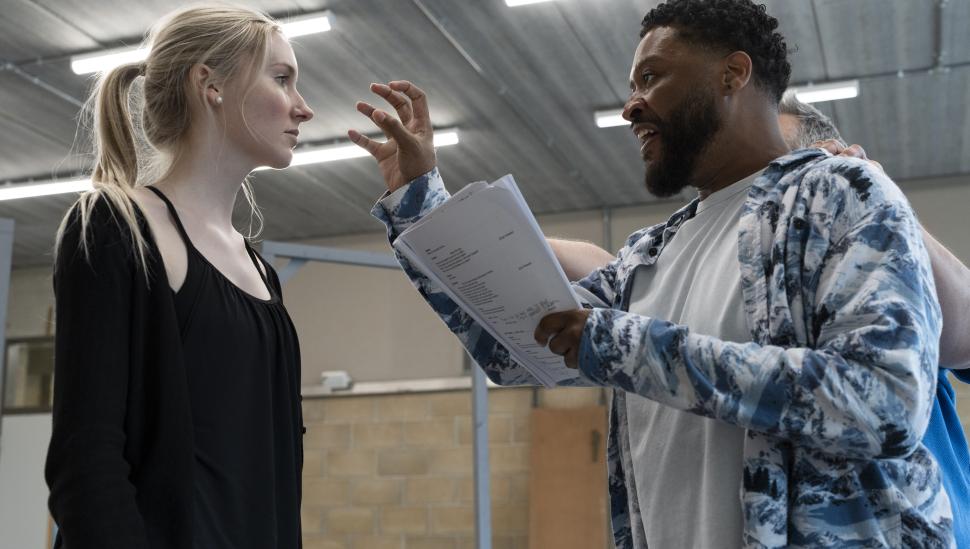
When it comes to the Shakespeare productions each year, how do you choose the texts? Do you try to have a mix of the very well-known ones and lesser-known ones that aren't as popular?
Well, we've gone up one production from three to four, which is great for students because they get a much bigger bite of the cherry. The ones we did last year were Measure for Measure, King Lear, Winter's Tale and Love's Labour's Loss. All four of those are really sophisticated plays. In terms of choosing them, we think about plays that are going to serve the students. We want to do some tragedies, some comedies, but the truth is it depends on the cohort, on what I think would suit them and how can we show our students off in the best possible way.
So why do you feel a grounding in the classics is important to an actor's training, especially when it comes to Shakespearean texts?
With Shakespeare, it's really important for an actor to be given the challenge of doing it. So to have the challenge of speaking language, which is incredibly challenging. In its syntax, in its thought. People would argue with this, but does it have subtext or not? Usually not. So you have to express your thought through the words that you're speaking, which is not something we do mostly in real life, unless we're arguing.
This is also poetry. It's full of visceral, rhetorical language and full of imagery. So you're having to balance the poetic requirements of it, the physical requirements of speaking this language with your breath, with your body, with your mouth. You're sealing with thoughts from people who are quite far away from you, there's a huge imaginative leap in that. And you're dealing with a syntax which isn't natural to your own.
Balancing that with the creativity of bringing yourself to the character and bringing the character to you and the world of the play and connecting to the truth of this person, it's a huge challenge. There's nothing like it. In a way, it's speaking a foreign language to lots of people.
People often say if you can do Shakespeare, you can do anything. And that's the sort of old adage around it. But I think it's true. I think if you've done Shakespeare, you have that sense of approaching text in a different way, and I think what it does is it makes you think differently about words going forwards throughout the rest of your career.

There are lots of different layers then. And what you were saying, too, about the physicality of it, that being something you have to think about as well.
Yes, and getting to the end of your line. It's becoming increasingly tricky for people to deal with Shakespeare because of the nature of how we interact with the world, with the media, with each other increasingly online and increasingly isolated. In the old days, people used to go and hear a play. It's called an audience. It's audio. And so there's this real sense of actually it being about speaking and listening Shakespeare.
Tell me about your approach to teaching Shakespeare and how you make it feel exciting and relatable to your students and younger generations.
Well, I think there's two things, really. One is to be rigorous with understanding exactly what you're saying. I've seen so many productions, professional and otherwise, with people not really understanding what they're saying. Where someone is talking, but nothing is going on.
So it is important to really understand what you’re saying and also how verse can affect the meaning, all the clues in the text as to what's actually going on, what they're really thinking about their state of mind, about the pace at which it needs to be done, if it’s full of punctuation, if someone is changing their mind quickly.
But the other side of that, which is really important for me, is balancing it with playfulness and relaxation. So in class we play lots of games, lots of different exercises, sometimes without text, without language, in order that people can start to relate and to see the structure underneath it. I try to harness the playfulness of the students without any expectations or need of previous knowledge of Shakespeare and aligning that with the technical requirements of it and the structure of the thoughts through it.
And even though these plays are written so long ago, there are topics and themes that are still so relatable. Like falling in love and jealousy and obsession and ambition, all those things. I think these are things we can all relate to so well.
I completely agree. And it goes without saying that we wouldn't still be doing Shakespeare unless it had the ability to resonate with us. And that's obviously a big part of how I bring an actor to it. What's the reference? Who does this remind you of? What celebrity could this be? What is their status? Who are they?
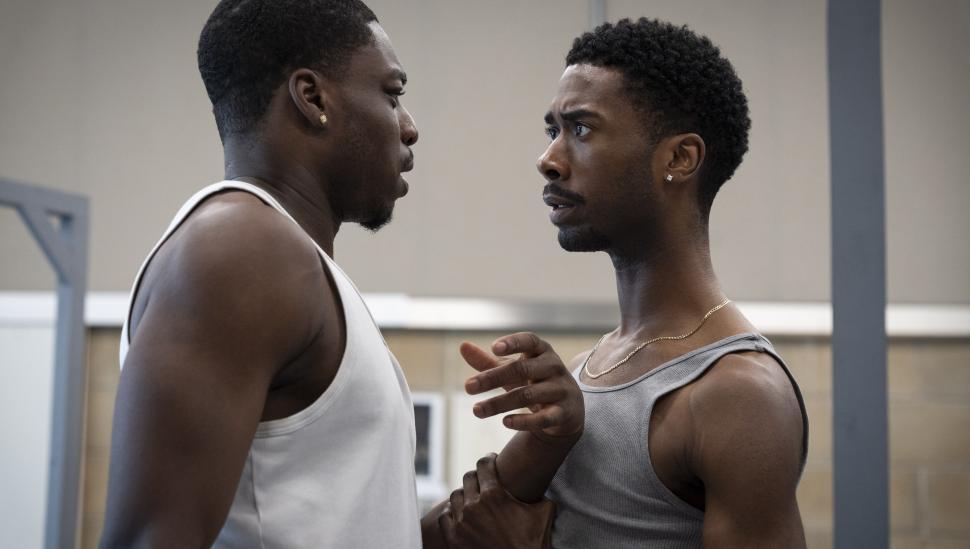
What have been some of your highlights teaching Shakespeare from the past year, both in the classroom and in performances?
Well, I did scenes from Henry IV, Part 1 and 2 at the end of last term, which is very exciting because it contains the character of Falstaff, one of Shakespeare's most beloved comic characters. So that was a huge challenge for the actors.
But what's really nice is that those two plays are about fathers and sons and surrogate fathers and sons. And sons betraying fathers and fathers betraying sons. It was a real pleasure to actually delve into Henry IV, Part 2 which isn't done very much and is a much more tricky play in terms of its structure and its density and performed much less often than Henry IV. That was a real highlight and the students attacked it with real commitment and joy and playfulness.
And how do you foster confidence in your students when they're approaching Shakespearean texts for the first time?
I think one thing is to dispel the myths and expectations and preconceptions of Shakespeare. When I came to Shakespeare as a teenager, it was always about how can I make this sound like I'm just thinking and speaking it. Before I had any idea about the technical structure of Shakespeare, of what it means to speak verse as opposed to prose, it was always about that.
So there's an element of needing to be able to understand that this stuff is there to be spoken. It's there to be lived. It's not there to be academically shown how clever it is. It's there to be connected with and understood universally by humans.
So similar to what I said before, playing games and encouraging boldness in them. Because there is a lot of fear sometimes, particularly with American students. They come to Shakespeare and they put on an English accent because that's what they think we want. Because it's Shakespeare and it's so embedded in English culture. And we just want to completely dispel that. You bring yourself to it and you bring it to yourself. In both those ways, we need you to be able to intersect with it and embody it. So I use games and exercises without text and always from the place of relaxation, because if you're tense then you can't listen.
You've spoken about looking at Shakespeare's peers as well, is that sometimes a revelation to your students? Everybody knows Shakespeare, but then looking at these other writers of the time and what they were doing, is that refreshing?
Yeah, hugely refreshing. Because in some ways they're trickier, particularly the Jacobean era. In some ways the language is trickier, but in some ways the motivations of the characters are simpler than Shakespeare. So the characters could be much more direct in going for what they want. Whereas some Shakespeare characters have extreme latitude in the way that they think, in the way that they philosophise about the world. And that's very tricky to play sometimes. Whereas the Jacobean people are often after blood and they want it now. So yeah, that can be really illuminating for them.
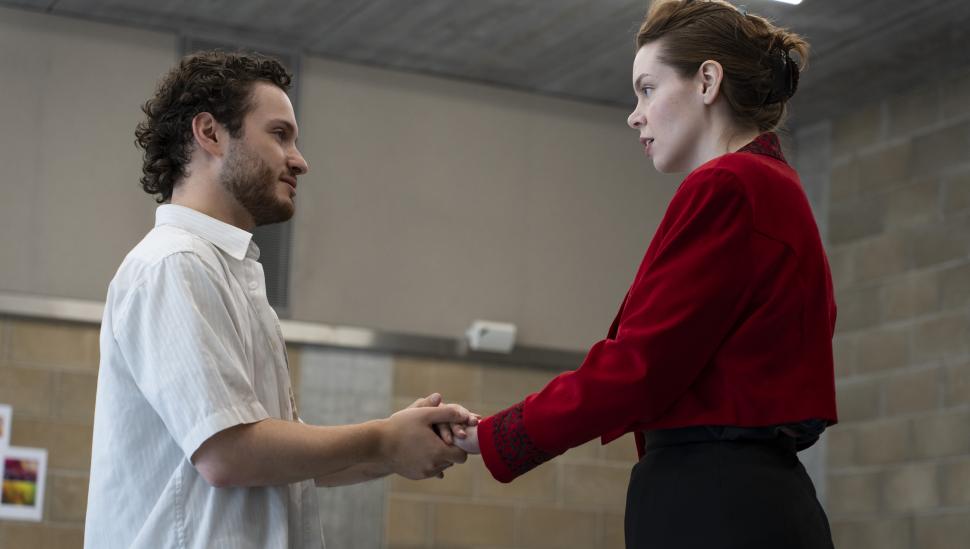
Why do you think Shakespeare’s works are still such a huge source of inspiration for modern theatremakers and filmmakers? Why are they still so relevant?
It feels like there's more Shakespeare than ever at the moment. For example, recently, the RSC did Hail to the Thief, which was a sort of gig theatre of Hamlet, but using the music of Radiohead. And this is happening more and more.
But what I would say is: Shakespeare is known. In the anglophone world, he is known by, almost everyone, whoever you are, whether it's the thin end of the wedge and going, "oh, to be or not to be," or, you know, a man wearing a ruff holding a skull. To the thick end of the wedge which is someone being able to recite the entire canon of Shakespeare.
So, the stories, some of the language, the history, even the image of Shakespeare is known in this country and anglophone countries in the West, perhaps globally. And if we know it, and we know its endless richness and the mercurial nature of it, it can be a forum. It can be a place where we can have a contemporary dialogue.
We can wield it, we can use it, we can impose on it the social and political issues that we want to. It's the only universal, I would argue that we have, other than the books of the major monotheistic religions, such as the Bible, the Koran, etc. And I think we need a forum like that for all of us, more than we've ever needed it before. Because Shakespeare writes characters that are completely rounded and psychologized.
So, he writes Macbeth who loves his wife, but is capable of slaughtering children, who is completely morally conflicted about whether he should do something or not, and yet is overwhelmed with ambition. So, someone who is warts and all, is good and bad. There's a full range of morality.
So, onto that, we can project all of the contemporary conflicts within ourselves and within the modern world. It is a universal medium onto which we can actually talk about ourselves and the world. Nowhere else can we do that, I don't think.
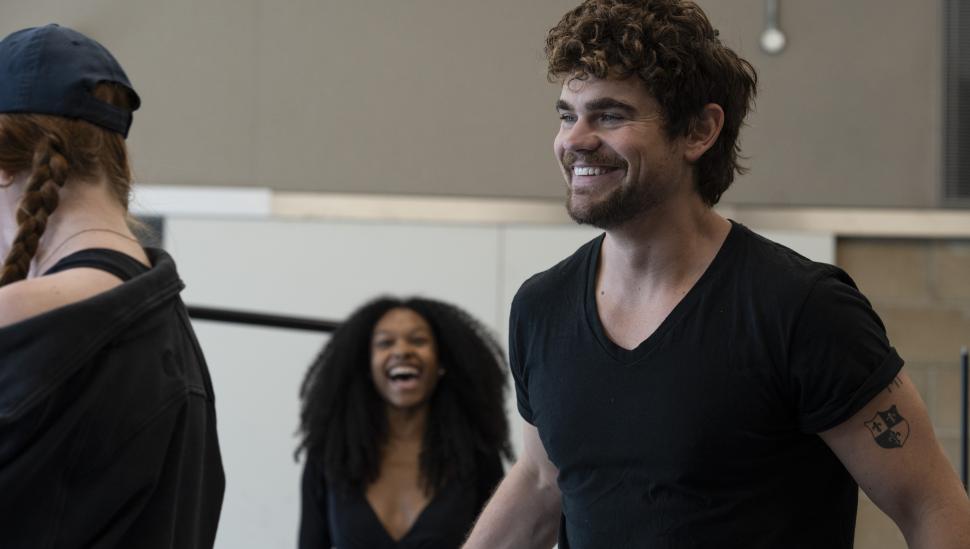
I'm actually seeing, especially from young people online, a backlash towards characters that can’t be put into boxes. So, imperfect victims, for example, the idea that you can be a victim but also be capable of harming someone too. People don't like that. And so, like you said, these stories are so important for having characters like that and challenging people too.
I think that's absolutely right. Imperfect victims. We have to accept that good people do bad things and bad people do good things. And it's increasingly difficult, in the current climate, where social media is so polarised. We are being asked and pushed to agree one way or the other. And how that manifests a little bit is people being reticent to embody someone doing a bad thing, a character doing a bad thing.
So, in order to really examine the world, we have to get over that hump. We have to get over the idea that no one is perfect and no one is certain. People don’t want to relate to characters if they’re doing bad things and then hurting other people. Whereas actually the truth is, psychologically, because something bad has happened to you, it's going to affect your future actions in the world. You know, you can be a victim and a perpetrator at the same time.
Recently the film Hamnet, which is about Shakespeare and the experience of writing Hamlet, has taken the world by storm. And then there are shows like Succession, with King Lear being a big inspiration. So Shakespeare is everywhere, as you said.
That's right. I remember I worked on a musical with a friend of mine a few years ago, and we had this brilliant M.D. called Joel Fran, and he was talking with us about plotting it. And his advice was just: you've got to think Shakespearean. You've got to think epically. There's so much structure in Shakespeare. The characters are so brilliantly pitted against each other morally, physically, romantically, etc, the drama is so exquisite. The juice you get from that is so brilliant.
Learn More
Apply now to be part of LAMDA’s creative community in 2026, and explore classical actor training at LAMDA in greater depth with our Shakespeare in Focus series.