LAMDA's Production & Technical Arts Programme Celebrates 60 Years
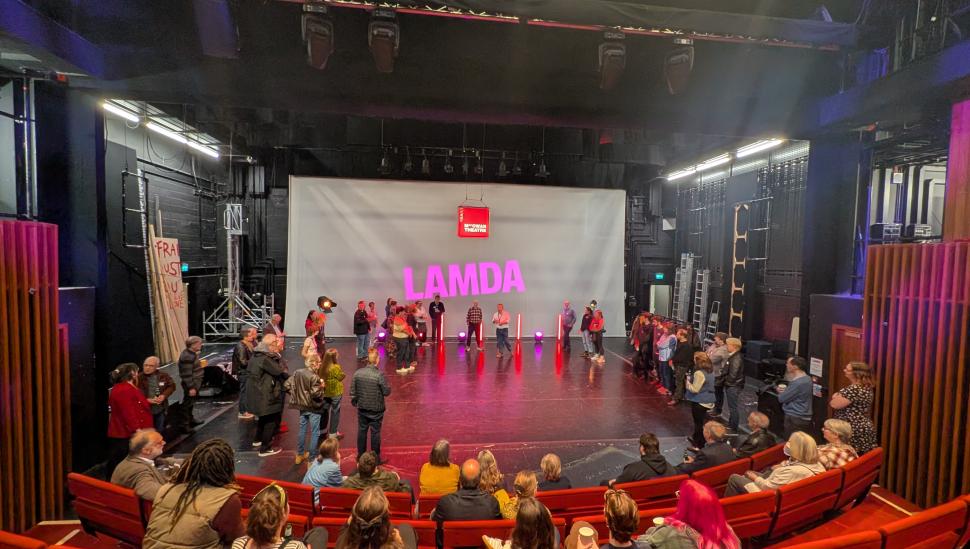
It’s not every day that we have the opportunity to mark a major milestone. However, in October of this year, LAMDA celebrated six decades of our Production and Technical Arts Programme with a celebration in the Sainsbury Theatre.
This was a great opportunity for alumni from every decade to come together, share stories, meet old pals and make new friends. Along with the chance to reconnect with each other, the alumni were also able to network with current students and tour our facilities. We were thrilled to welcome 115 alumni to the event, representing every decade of the course’s history – and it was clear that LAMDA held a strong place in everyone’s heart.
For some it was their first time visiting LAMDA’s current location in Baron’s Court, and for others it was an opportunity to compare what had changed since their last visit. LAMDA moved to its current location just over 20 years ago, so many of the day’s guests had undertaken their training at LAMDA’s previous location – Tower House in Earl’s Court, and the MacOwan Theatre in Kensington.
In 1965 LAMDA created training for stage managers and theatre technicians, based in its MacOwan Theatre. This was the brain child of Richard Pilbrow, the established lighting designer, and was set up in conjunction with Theatre Projects. Richard had seen that there was a market to train stage managers, lighting and sound designers, and theatre technicians for both the industry and also to work with the LAMDA acting students in creating high quality theatre productions.
In creating the syllabus Richard enlisted the support of one of the leading sound designers of the time, David Collison, along with the eminent stage manager Robert Stanton – who took on role of Course Director, a position that he held until 1986. This was the first course of its kind in the country, and many of the other leading drama schools followed the LAMDA model and set up their own courses.
The aim at the time was purely to deliver first class vocational training for work within the industry in the production departments, with the qualification simply being a LAMDA Diploma – which quickly became a kite mark for quality. In the following decades the course, while maintaining the vocational principles, developed academic qualifications for the graduating students – starting with a Diploma in Higher Education. In 2014 the course was revalidated by Kent University as a Foundation Degree with an optional BA Hons Top Up, and in 2022 became a three year BA Hons in Production and Technical Arts – Stage and Screen.
Throughout its history the course has paved the way in vocational training for the arts, ensuring that it stays in line with industry custom and practice, frequently investing in the latest technical facilities.
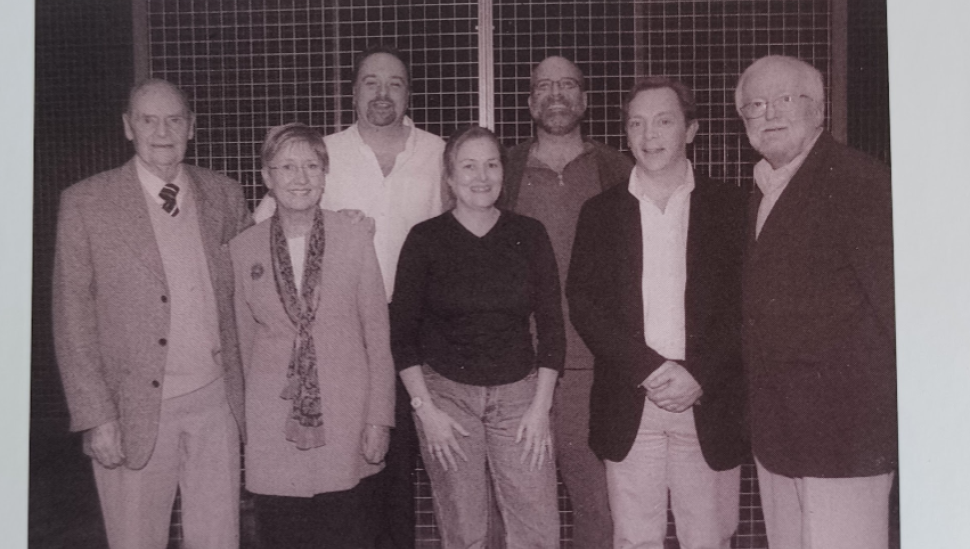
Pictured below are all six of the Programme Leaders with Richard, taken over twenty years ago. Current Programme Leader and himself an alumnus of the Programme, Rob Young, had recently joined LAMDA in this role when the photograph was taken.
First called the Stage Management & Technical Theatre Course back in 1965, and considered a ground-breaking professional training Programme from the get-go, it is amazing to consider the number of graduates produced by the Programme over these 60 years, and the impact they've had on the performing arts industry.
(From L to R) Bob Stanton, Sue Thornton, Mark Shayle, Sarah Rowe, Patrick Frazer, Rob Young and Richard Pilbrow. Photograph by Richard H. Smith, 2005.
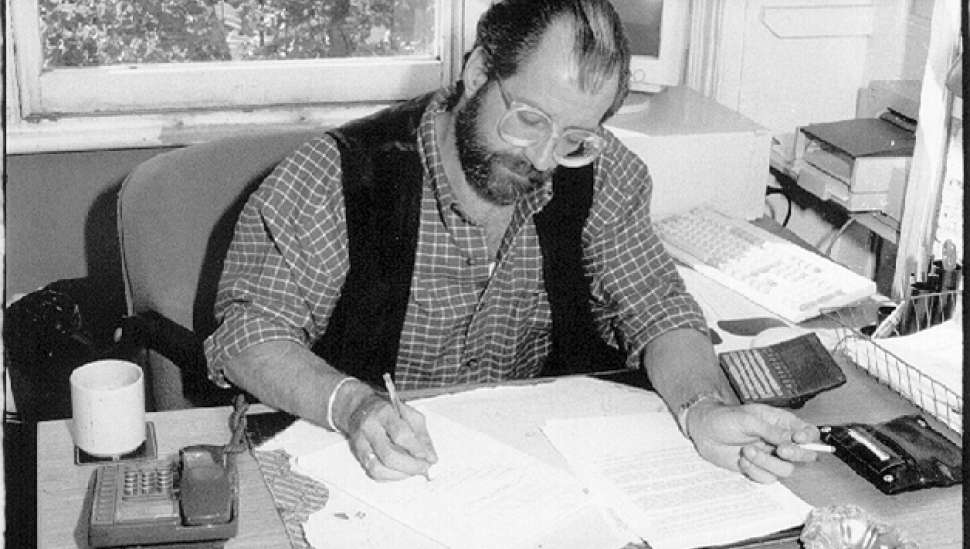
A graduate of Queens' College Cambridge in 1978 with a BA (Hons) in English Literature, his first professional work was as a director and company manager for a small touring company before then joining the Lyric Theatre, Hammersmith for nearly six years, working with John Dexter and David Jones, amongst others. Following that became a freelance career as a Production Manager and Stage Manager before joining the staff at LAMDA.
Patrick was Chairman of the Conference of Drama Schools Stage Management Sub-Committee. He also undertook voluntary work for the Samaritans. After leaving LAMDA, Patrick returned to his freelance career which included time with The Royal Shakespeare Company.
Patrick led the Production & Technical Arts Programme at LAMDA with great dedication. Significantly, was instrumental in encouraging the late Peter James to apply to become LAMDA’s Principal, which had profound and long-term positive implications for LAMDA as whole.
We thank Patrick for his immense contribution to our story.