We chat with recent grads Madeleine Bloxam and Luke Stiles about their experiences performing Shakespeare at LAMDA.
There’s nothing quite like hearing Shakespeare’s words ring out in a packed theatre, or the experience of stepping out on stage in a role from one of the Bard’s iconic plays.
For students on LAMDA’s MA and MFA Classical Acting programmes, training doesn’t stay in the rehearsal room but culminates in them taking to the stage in fully realised Shakespeare productions, with costumes, lighting, live audiences and the creative collaboration of our Production & Technical Arts team.
Recent graduate Luke Stiles (MFA Classical Acting, 2025) moved to London for his actor training after he met Rodney Cottier (LAMDA’s Professor of Shakespeare and Early Modern Drama) at his US audition.
“Like many of my classmates, I was completely taken with my Rodney audition experience,” Luke says. “In the midst of the chaotic and at times demoralizing process of applying to MFA programs, he stood out as a kind, thoughtful, and incredibly sharp presence in the room. Covid had taken a large bite out of my undergrad experience, so the prospect of learning from the greats, eating my acting vegetables, and experiencing all the city of London has to offer was too attractive to pass up.”
Accepting a place on LAMDA’s Classical Acting programme was a similar decision for Madeleine Bloxam (MA Classical Acting, 2024).
“It felt like something was missing from my undergraduate training in the states,” she muses. “I only had one Heightened Language class in four years of college. Post-grad, I had reliable training for contemporary acting in New York, but not for classical methods. I also loved the idea of an intensive program that would challenge me.”
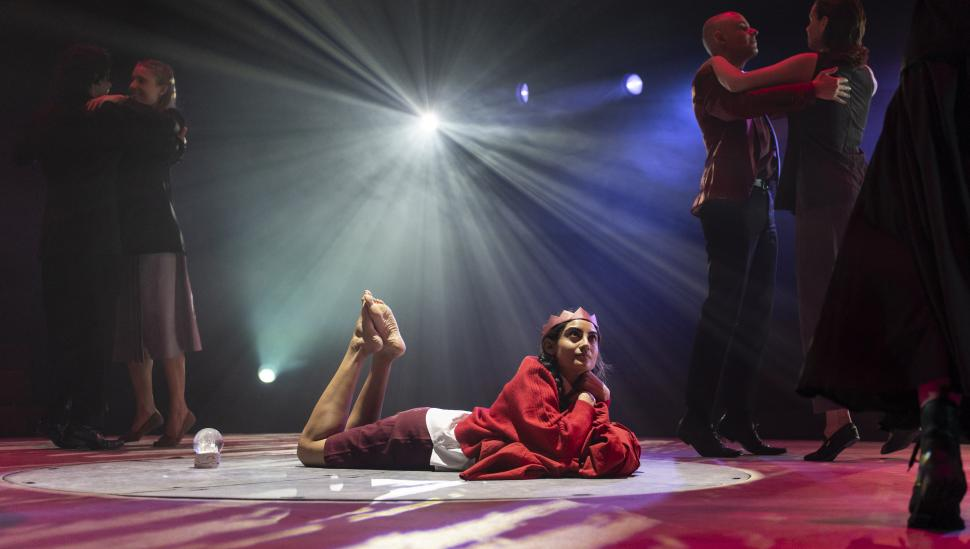
Both Luke and Madeleine quickly found a home at LAMDA and experienced defining moments in performing Shakespeare on stage. An essential part of the Classical Acting programme, last year’s Shakespeare season included productions of King Lear, Love’s Labour’s Lost, Measure for Measure and The Winter’s Tale, giving students the chance to step into some of Shakespeare’s most epic, playful, dark and romantic stories.
“Unsurprisingly, the final run of our full-fledged Shakespeare productions stands out as the highlight,” Luke remembers. “Being in full costume, under the lights, all of which were aspects that we had to earn piece by piece throughout our training, felt, understandably, like a culmination of the whole programme. I also look back incredibly fondly on all those quieter building moments, where we made breakthroughs in class, or even better, watched those revelations in our classmates.”
That sense of earning the stage is central to the Classical Acting journey. Students spend months developing voice, movement, textual analysis and ensemble work before stepping into these public productions, so that by the time they step out onto the stage, they’re not just reciting Shakespeare but living it.
For Madeleine, the joy of performance lay in transformation and collaboration.
“Portraying the Witches in Macbeth with Emma Garcia Green and Lucy Spreckley was a real highlight for me – working together to develop how these three characters moved and spoke together. I mean to chant double, double, toil and trouble around a cauldron with two friends? How good can it get!”
Madeleine adds, “I doubled four times throughout the year – Hotspur/Mistress Quickly in Henry IV, Part One and Lady M/Second Witch in Macbeth to name a few. One moment I’m a cheeky hostess, the next I’m a hot-headed warrior. It was great practice in how I can bring myself to different characters but also to get out of my comfort zone and ensure that I wasn’t holding myself back from transforming into someone else.”
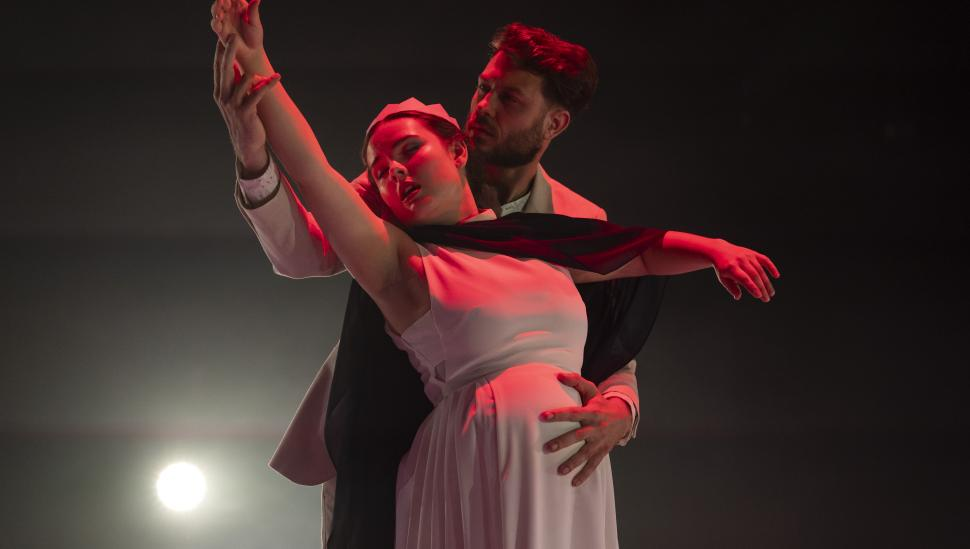
These rigorous and exhilarating moments were key to preparing Luke and Madeleine for post-graduation life as professional actors working on the stage, where they combine their craft with a sense of playfulness.
Luke reflects: “Having a foundation in classical training is a comforting piece of evidence that what we do and who we are has the backing of the enduring champion of acting training that is LAMDA. Feeling that freedom to be in your body and out of your head on stage comes from trusting the work that we put into the rehearsal room.”
Madeleine adds, “Making big, bold choices and taking up space has been a struggle for me in the past. My tutors were very quick to pick up on that and to encourage me to trust my instincts. You don’t need to have it all figured out on day one. Come prepared, come with ideas, but be ready to evolve. Be open and free and adaptive. And above all, be generous and compassionate to your fellow company members.”
And for anyone who finds Shakespeare intimidating? Both Luke and Madeleine are clear: it’s meant to be played. At LAMDA, Shakespeare isn’t preserved like an antique, or only to be examined as an academic text. It’s something that is living and breathing, meant to be explored, questioned, embodied and ultimately shared with a live audience.
“My favourite way into these texts, and what can help puncture that intimidating feeling, is that they’re funny. Really incredibly witty and surprising and fun,” Luke says. “And when else do you get to powder wigs and brandish swords?”
Madeleine agrees: “You do not need to read a classical text and understand exactly what it means right off the page. I think half the fun is investigating what and why you are saying what you’re saying. Don’t be afraid to be seen trying.”
Learn More
Apply now to be part of LAMDA’s creative community in 2026, and explore classical actor training at LAMDA in greater depth with our Shakespeare in Focus series: